When Zebra Comics recently announced that the company, as people knew it, was shutting down, the reaction from the community was immediate. Social media filled with questions, speculation and messages from people trying to understand what had happened. Some were genuinely worried that this was the end of a platform they had followed for years, while others wondered whether something bigger was happening behind the scenes.
As it turned out, there was.
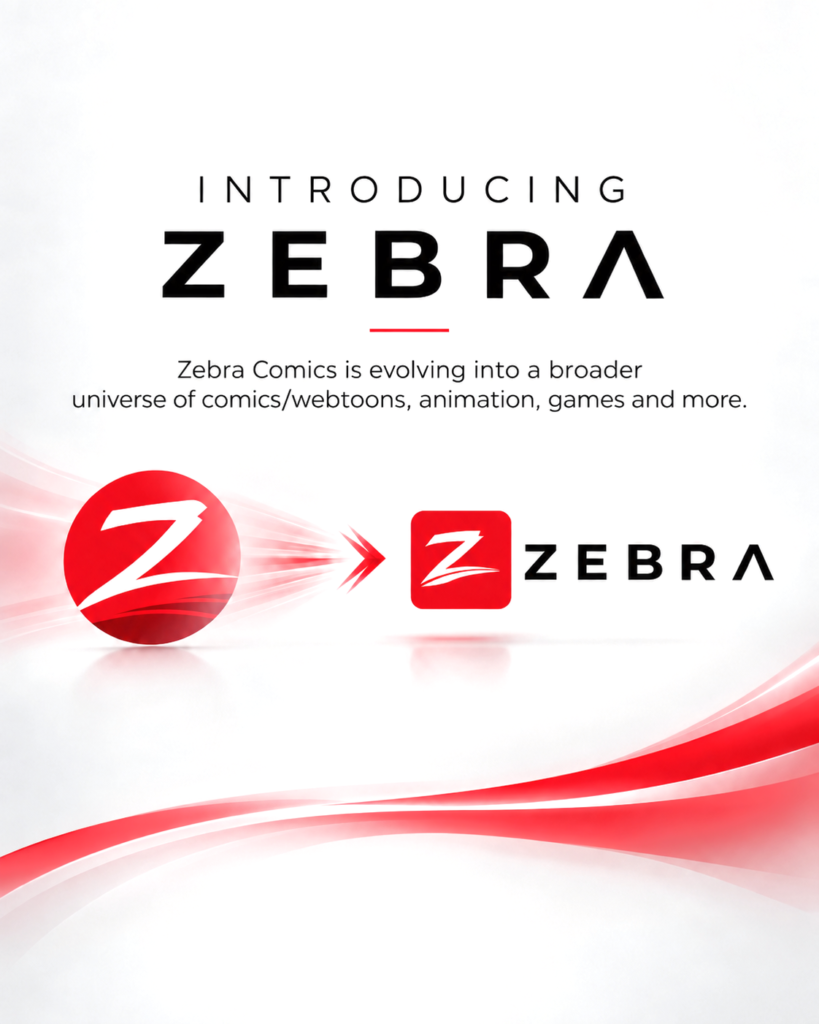
Zebra Comics was not disappearing. Instead, the company was preparing for one of the biggest transitions in its history: Zebra Comics is becoming simply Z E B R A.
The announcement marks much more than a change of name or visual identity. It reflects how much the company has evolved since it started and, perhaps more importantly, what it intends to become next.
Why is Zebra Comics becoming Z E B R A?
For years, the name Zebra Comics clearly communicated what the company was known for: comics. But the company’s ambitions have gradually expanded beyond publishing and digital comics, making the old name increasingly unable to represent everything being built under the brand.
The new Z E B R A is positioning itself as a broader media and entertainment company working across comics, animation, film, games, video games and merchandise. At the centre of this strategy is intellectual property.
In simple terms, Z E B R A wants to become an IP factory: a place where original characters, stories and fictional worlds can be created, developed and eventually expressed through several entertainment formats. A story might begin as a comic or webtoon, for example, before growing into an animated series, a film, a video game or a range of merchandise.
This does not mean that Z E B R A is moving away from comics. Quite the opposite. The company is doubling down on comics and webtoons while creating more possibilities for successful stories to grow beyond the page. Comics remain an important foundation of the ecosystem, but they no longer define its limits.
At the same time, the platform itself is becoming increasingly international in the kind of entertainment it offers. Alongside African comics and webtoons, Z E B R A is expanding its catalogue to serve audiences interested in Japanese manga, Korean manhwa and other forms of global visual storytelling. The distinction is important: as an African company, Z E B R A remains deeply focused on producing and developing African intellectual property, but as a global entertainment platform, it also wants to give its audience access to great stories from around the world.
From Africa to a global audience
The rebrand also comes at a time when Z E B R A is looking beyond its original markets. The company has outlined plans to operate across 13 African markets, while also expanding its ambitions towards Brazil, the United States and Europe.
For a company born in Cameroon, that represents an important evolution. The objective is no longer simply to build a platform where people can discover African comics. Z E B R A wants to participate in the much larger global business of creating, developing and distributing entertainment intellectual property.
That distinction is important because African stories do not have to remain confined to one medium or one geography. A character created in Cameroon can become a webtoon read in Brazil, an animation watched in France or a video game played in the United States. The format can change while the story, characters and world at the centre of the intellectual property remain recognizable.
The strategy therefore works in both directions. Z E B R A can bring manga, manhwa, comics, animation and other entertainment from around the world to its growing audience, while producing African IP that can travel from the continent to international markets.
Z E B R A’s long-term ambition is therefore to build stories capable of travelling across both formats and borders.
A new Z E B R A platform is coming
The transformation is not limited to the brand itself. Alongside the rebrand, the company is preparing Version 3 of the Z E B R A platform, a major evolution of the application and the experience surrounding its content.
Version 3 is being developed to support the broader direction of the company and create a richer experience for readers, viewers, creators and fans. Among the major additions will be a stronger creator-focused publishing programme, opening up new opportunities for creators to publish their work through the platform, as well as new monetization systems adapted to individual markets. These are significant additions that did not exist in the previous version of the platform and represent an important part of Z E B R A’s evolution from a content application into a broader entertainment ecosystem.
More details about Version 3, its features, creator opportunities and new monetization systems will be revealed in the coming days.
In many ways, the new application and the new identity are parts of the same transition. If Z E B R A is going to become home to comics, manga, manhwa, animation and other forms of entertainment, while creating new opportunities for the people producing that content, the platform itself must evolve with that vision.
The community reaction said something important
Perhaps one of the most interesting outcomes of the “shutdown” campaign was not the reveal itself, but what happened before people knew the truth.
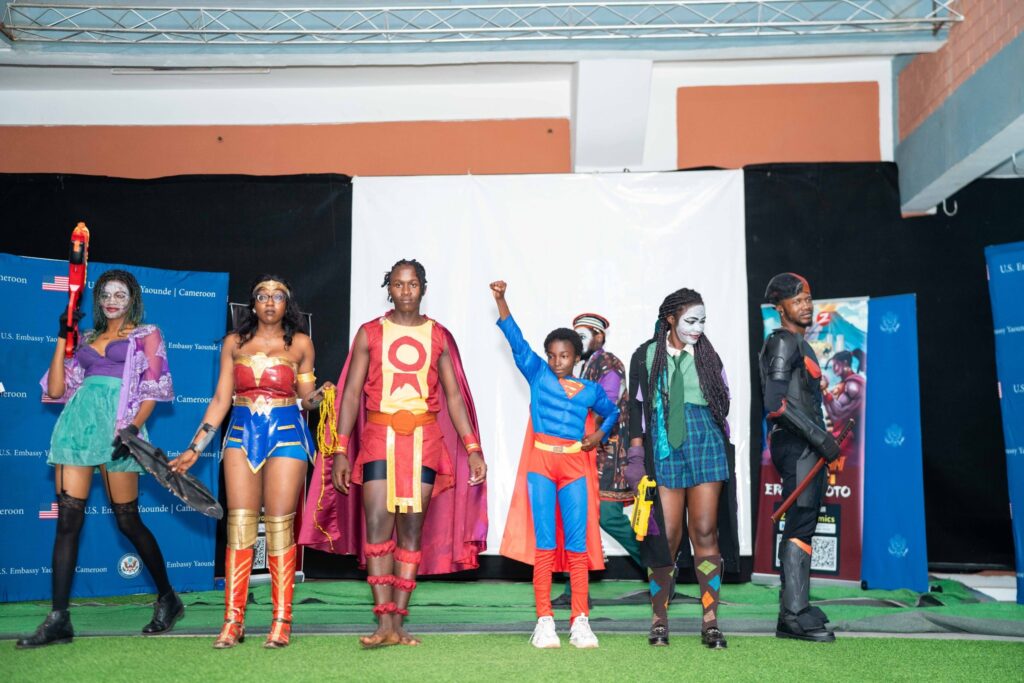
When the community believed Zebra Comics could actually be going away, people reacted. They asked questions, shared memories, expressed disappointment and debated what the announcement meant. The subsequent #IAmZebra and #JeSuisZebra campaign generated another wave of participation from people who identified with the community that had grown around the brand.
That reaction revealed something that cannot easily be measured through downloads or social-media numbers: over the years, Zebra Comics has established a recognizable place within Cameroon’s geek culture and the wider African comics and pop-culture community.
The challenge now is to take that foundation and build something much larger upon it.
Zebra Comics helped introduce the world to the company’s stories. Z E B R A is being built to take those stories into new worlds, new formats and new markets.
One story. Many worlds.
Frequently Asked Questions
Is Zebra Comics really shutting down?
No. The “shutdown” campaign preceded the announcement that Zebra Comics is evolving into Z E B R A, a broader media and entertainment brand.
Why is Zebra Comics changing its name to Z E B R A?
The company is expanding beyond comics and webtoons into animation, film, games, video games and merchandise. The shorter Z E B R A identity is intended to represent this wider ambition.
Is Z E B R A abandoning comics?
No. Comics and webtoons remain central to Z E B R A’s strategy. The difference is that stories developed through comics can now potentially expand into animation, film, games, merchandise and other formats.
Will Z E B R A have Japanese manga and Korean manhwa?
Yes. While Z E B R A remains focused on developing and exporting African intellectual property, the platform is also expanding its entertainment catalogue to include content such as Japanese manga and Korean manhwa, serving the wider interests of its audience across different markets.
What does Z E B R A mean by an “IP factory”?
An IP factory develops original intellectual properties — including stories, characters and fictional worlds — that can be adapted and commercialized across different entertainment formats and markets. Z E B R A’s focus is on developing African IP with the potential to reach audiences both within Africa and internationally.
Is there a new Z E B R A app coming?
Yes. Version 3 of the Z E B R A platform is being prepared as part of the company’s broader transformation. It will introduce new experiences for audiences and creators, including a stronger creator publishing programme and new monetization systems designed for different markets.
Where is Z E B R A expanding?
The company has outlined ambitions across 13 African markets, as well as Brazil, the United States and Europe, as it works towards building a more globally accessible African entertainment ecosystem.