African Comics, Webcomics, and the Future of Entertainment
Introduction: A Quiet Crisis in African Comics and Entertainment
As the year draws to a close, it feels important to pause—not to celebrate growth metrics or creative milestones—but to reflect on something far more fragile: the survival of African comics, webcomics, and creative entertainment, and by extension, African self-belief.
There is a silent crisis that affects almost every African product, whether in comics, webcomics, film, fashion, music, digital entertainment, or publishing. It is not simply a problem of quality, funding, or distribution. It is a perception problem—deep, inherited, and quietly destructive.
This crisis transcends the comics industry. It is about how Africa sees itself through the entertainment it produces.
An Uncomfortable Moment at Bilili BD Festival: African Comics vs Global Entertainment

In December 2025, during the Bilili BD Festival—one of Africa’s growing celebrations of comics and graphic storytelling—something quietly unsettling unfolded.
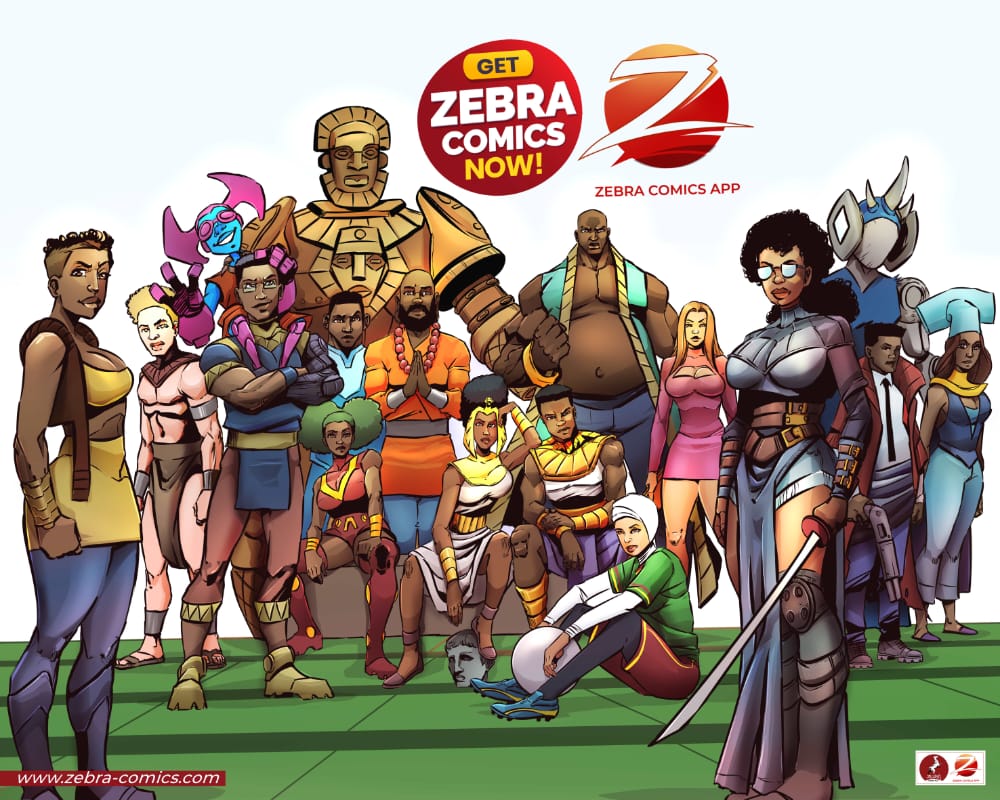
At the festival’s digital exposition, visitors were invited to freely explore African comics and African webcomics from platforms such as Zebra Comics, Plumics, and Gara Store. For many, it was a moment of discovery.
But a much larger group did something else.
They entered the space, glanced briefly at the African comics, turned them off—and opened YouTube to watch free Japanese anime.
This happened at an African comics and entertainment festival, in the heart of Africa.
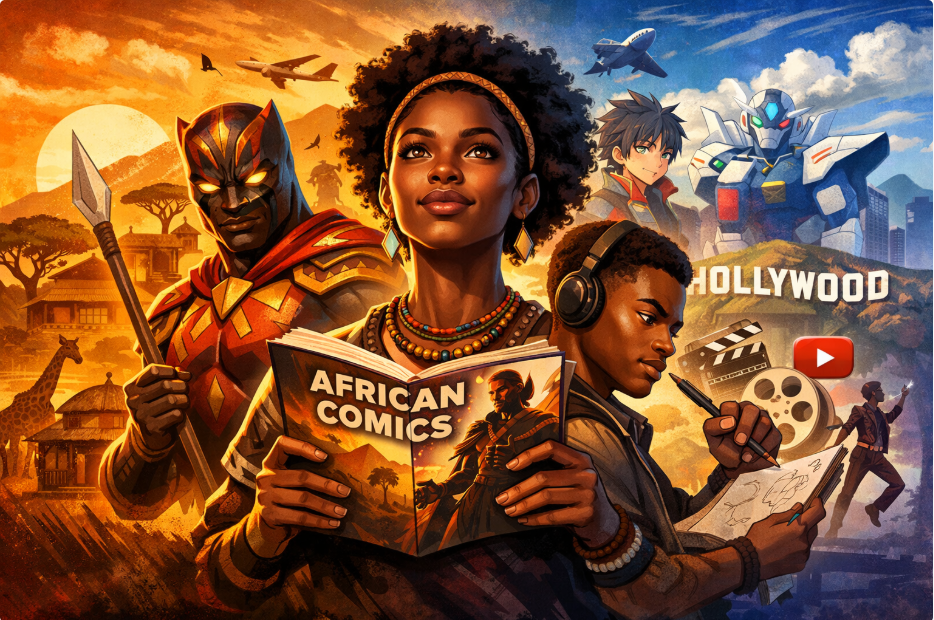
That moment revealed something painful: African comics are still treated as optional curiosity, while foreign entertainment is treated as default culture—even on African soil.
When Pride Turns Into Insecurity in African Creative Spaces
Later during the festival, a cosplay contest brought together participants from different African countries. Talent was abundant. The energy was high.
When the winners were announced—and they did not come from the host country—the crowd booed.
What should have been a celebration of pan-African creativity became a display of insecurity. This reaction was not about cosplay. It was about fragile identity.
African entertainment cannot grow if African audiences only support what flatters them, rather than what advances the ecosystem.
Why African Comic and Webcomic Creators Look Abroad First
Across the continent, many African comic artists, webcomic creators, and visual storytellers prioritize publishing on foreign platforms such as global webcomic apps and international publishers before considering African ones.
This choice is understandable. Creators go where systems work, where audiences pay, and where validation feels guaranteed.
But this behavior reveals a dangerous truth: even Africans often do not believe African comics platforms—like Zebra Comics and other emerging hubs—can succeed.
No comics or webcomics ecosystem can survive if its creators abandon it before it matures.
The Root of the Problem: Identity and the Devaluation of African Entertainment

Slavery stripped Africans of agency. Colonialism redefined value. Neo-colonialism preserved dependency. Poverty reinforced survival thinking.
Over generations, Africans were trained to associate quality entertainment with “elsewhere.”
As a result, African comics are judged more harshly, African webcomics are given less patience, and foreign entertainment platforms are assumed superior by default.
This is not competition. It is psychological imbalance.
Governments, Markets, and the Uneven Entertainment Battlefield
African comics and webcomics now compete directly with:
– Hollywood studios
– Japanese manga and anime publishers
– Global streaming and entertainment platforms
These foreign industries benefit from decades of state support, structured export strategies, and massive capital investment.
Meanwhile, African creative industries are left to survive organically.
Culture is treated as optional entertainment rather than strategic infrastructure—despite the fact that comics and storytelling shape imagination long before politics ever does.
Soft Power: Why Comics and Entertainment Shape Global Power
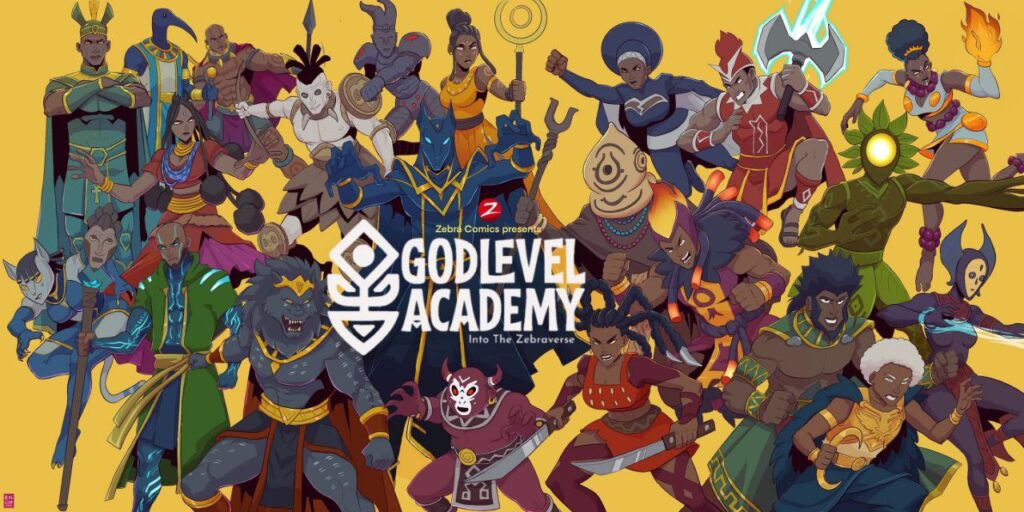
Comics, webcomics, animation, and film are not just entertainment. They are soft power instruments.
Hollywood exports American values.
Anime exports Japanese aesthetics and philosophy.
K-dramas export Korean identity and aspiration.
African comics, by contrast, struggle to scale globally—not because of lack of talent, but because they lack consistent local support.
When African entertainment is not supported locally, it cannot export globally.
When it cannot export globally, Africa loses control of its narrative.
The Geopolitical Cost of Ignoring African Comics
Countries that dominate global entertainment influence tourism, foreign investment, migration desirability, and diplomatic sympathy.
If Africa remains primarily a consumer of other people’s comics and entertainment, it remains invisible in the global imagination.
Supporting African comics and webcomics is not just cultural—it is geopolitical.
Nations that do not tell their own stories are eventually spoken for.
Culture as Strategic Defense, Not Optional Entertainment
Many governments still treat comics, animation, and digital storytelling as luxuries.
History shows the opposite.
Culture is often the first exporter of influence and the last defender of identity. Nations that invested early in cultural industries—Japan, South Korea, the United States—now dominate global entertainment markets.
Failing to invest in African comics today means surrendering Africa’s narrative tomorrow.
How Foreign Entertainment Became Our Default Reference

What Must Be Done to Save African Comics and Webcomics
1. African Comics Platforms Must Raise Quality Relentlessly
African comics and webcomics must meet global standards while remaining culturally authentic. Platforms such as Zebra Comics are already pushing this frontier.
2. Governments Must Protect African Entertainment Ecosystems
Through funding, education reform, quotas, tax incentives, and local distribution channels that normalize African content.
3. Africans Must Support African Comics in Practice
By reading, paying for, sharing, and recommending African comics and webcomics—not just celebrating them rhetorically.
This Is Not Anti-Foreign Entertainment
We admire global comics, anime, and films. Cultural exchange enriches humanity.
But without support, African entertainment will disappear—not by force, but by neglect.
Final Reflection: The Future of African Comics Depends on Choice
If Africans do not read African comics, support African webcomics, and invest in African entertainment platforms, then who will?
If we do not buy ourselves, others will define us—or erase us.
Africa has talent.
The question is whether Africa will choose to survive in global entertainment.